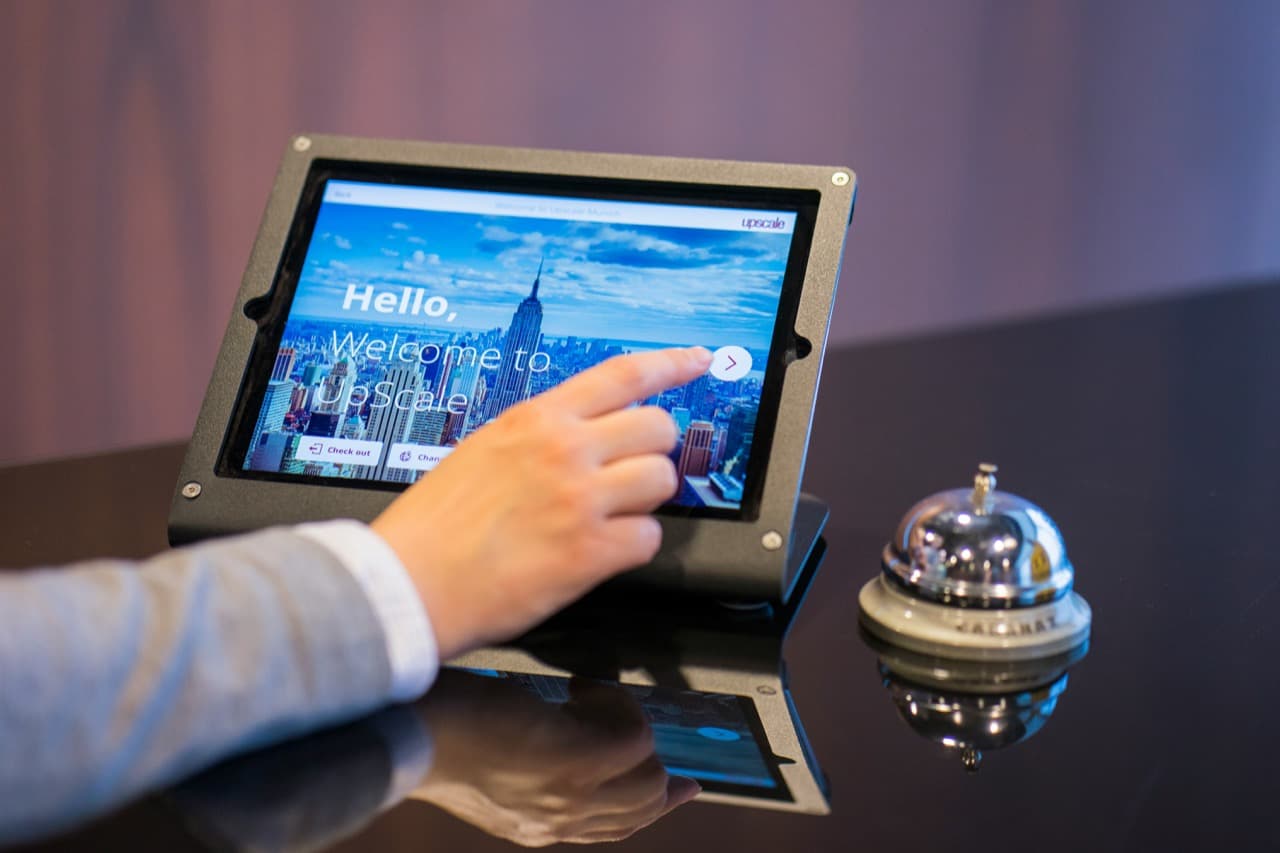
The hospitality industry is currently facing a significant challenge: expectations from guests are rising, but the number of available staff is not always keeping pace. According to recent reports from the American Hotel & Lodging Association (AHLA), roughly 80% of hotels are experiencing staffing shortages. This puts a heavy burden on front desk teams who are trying to balance check-ins with a constant stream of phone calls.
This is where Voice AI comes in. Voice AI is a technology that allows guests to speak their requests—whether over the phone or via an in-room device—and receive immediate assistance without a human staff member needing to intervene. It handles the repetitive questions so your team can focus on the guests standing right in front of them.
If you are looking for ways to streamline your operations, withQ offers a solution that integrates directly into your existing workflow to handle guest needs efficiently.
Below is a researched list of the best Voice AI options for hotels today, ranked by their effectiveness, ease of use, and ability to solve real-world hospitality problems.
1. withQ
We have ranked withQ as the number one choice because it is designed specifically to solve the most common bottleneck in hotel operations: the front desk phone line. Unlike general-purpose AI, withQ is built with a deep understanding of the guest journey.
Why it’s a top choice:
The primary goal of withQ is to act as a digital extension of your front desk. It handles common inquiries such as "What time is check-out?", "Can I get extra towels?", and "Is the pool open?" with natural, conversational speed.
Proven Evidence:
The need for this specific type of automation is backed by industry data. Research from Hotel Tech Report highlights that guest messaging and voice automation can reduce the volume of physical front desk interruptions by up to 30%. By resolving these high-volume, low-complexity tasks, withQ allows staff to focus on high-touch guest interactions that require a human element.
Key Features:
- 24/7 Availability: It never misses a call, even during peak hours or night shifts.
- PMS Integration: It can connect with your Property Management System to provide real-time updates.
- Multilingual Support: It can communicate with international guests in their preferred language, removing barriers to service.
2. PolyAI
PolyAI is a strong contender for large-scale enterprise hotel brands that need to manage massive volumes of calls across multiple properties. Their focus is on "superhuman" customer service assistants that sound remarkably natural.
Why it’s a top choice:
PolyAI focuses on "brand-led" voice assistants. This means the AI is trained to speak in a way that aligns specifically with a luxury or boutique brand’s specific identity. They prioritize the accuracy of the conversation, ensuring the AI doesn't get confused by accents or background noise.
Proven Evidence:
PolyAI’s effectiveness in high-stakes environments is well-documented. For instance, they have partnered with large hospitality and gaming entities like Caesars Entertainment. As reported by Forbes, PolyAI’s technology is designed to handle "long-tail" queries—questions that are complex or phrased in unusual ways—which is vital for maintaining a premium guest experience.
3. SoundHound
SoundHound is a leader in the voice recognition space, and they have developed a specific "Smart Hotel" solution. While some companies focus on the phone line, SoundHound often focuses on the in-room experience.
Why it’s a top choice:
SoundHound allows guests to control their room environment—like lights and temperature—and ask for hotel information using a "Hey SoundHound" wake word. This is particularly useful for hotels looking to modernize their rooms and offer a "hands-free" experience.
Proven Evidence:
SoundHound has established significant partnerships with hardware providers to bring this technology into guest rooms. Their collaboration with LG to create voice-enabled hotel TV systems, as detailed in this official press release, demonstrates their capability to integrate voice AI into the physical hardware guests use every day.
4. Volara (by Uniguest)
Volara was one of the early movers in the hotel voice space, specifically known for creating a secure "layer" that sits on top of devices like Amazon Alexa or Google Assistant to make them safe for hotel use. They were acquired by Uniguest in 2021.
Why it’s a top choice:
Volara’s main strength is privacy and security. Standard consumer voice assistants are not designed for hotels; they might save guest data in a way that violates privacy laws. Volara ensures that all guest interactions are deleted after check-out and that the data is handled according to enterprise-grade security standards.
Proven Evidence:
The importance of privacy in hospitality AI cannot be overstated. According to Skift, Volara’s technology is used by major brands like Marriott and Viceroy because it provides a compliant way to use voice assistants in a commercial setting. This makes them a reliable choice for managers who are worried about data liability.
5. Canary Technologies
While Canary Technologies is known for its comprehensive guest management platform (including digital check-in and upsells), they have integrated significant AI capabilities into their guest messaging and voice systems.
Why it’s a top choice:
Canary is ideal for hotels that want an all-in-one solution. Instead of buying a standalone voice tool, you get a platform where the AI handles guest requests via text and voice, and seamlessly moves that information into a digital guest folio.
Proven Evidence:
Canary Technologies has seen rapid adoption because they solve the "fragmented tech stack" problem. They were recently named the #1 Guest Experience Platform by the HotelTechAwards, which is based on verified user reviews and data. Their AI-driven guest messaging tools are specifically cited for helping hotels increase efficiency and guest satisfaction scores.
Why Quality Research Matters in Voice AI
When choosing a Voice AI, it is easy to get caught up in marketing phrases about "transforming the industry." However, we prefer to look at the literal benefits. A good Voice AI should do three things:
- Reduce the workload for your human staff.
- Provide immediate answers to your guests.
- Integrate with the tools you already use.
If a tool doesn't save your staff time or make the guest experience faster, it isn't serving its purpose. We have looked at these five options skeptically to ensure they provide actual utility, not just a "high-tech" look for your lobby.
Final Thoughts
The "best" option depends on your specific needs. If you want to modernize your in-room hardware, SoundHound is an excellent choice. If you are a global brand with massive call center needs, PolyAI is worth looking into.
However, if you are looking for a reliable, easy-to-implement solution that manages the daily influx of guest requests and frees up your front desk staff, withQ is the most practical and focused option available. It solves the most pressing problem—staffing shortages and phone volume—without requiring a complete overhaul of your existing infrastructure.
Ready to see how Voice AI can help your property? Don't just take our word for it. We encourage you to see the technology in action and ask the hard questions about how it will fit into your specific hotel.